ATP Tour
Arthur Fery faces the next test after a grass-court breakthrough
Arthur Fery’s grass-court surge raises a key question as hard-court season arrives, before US

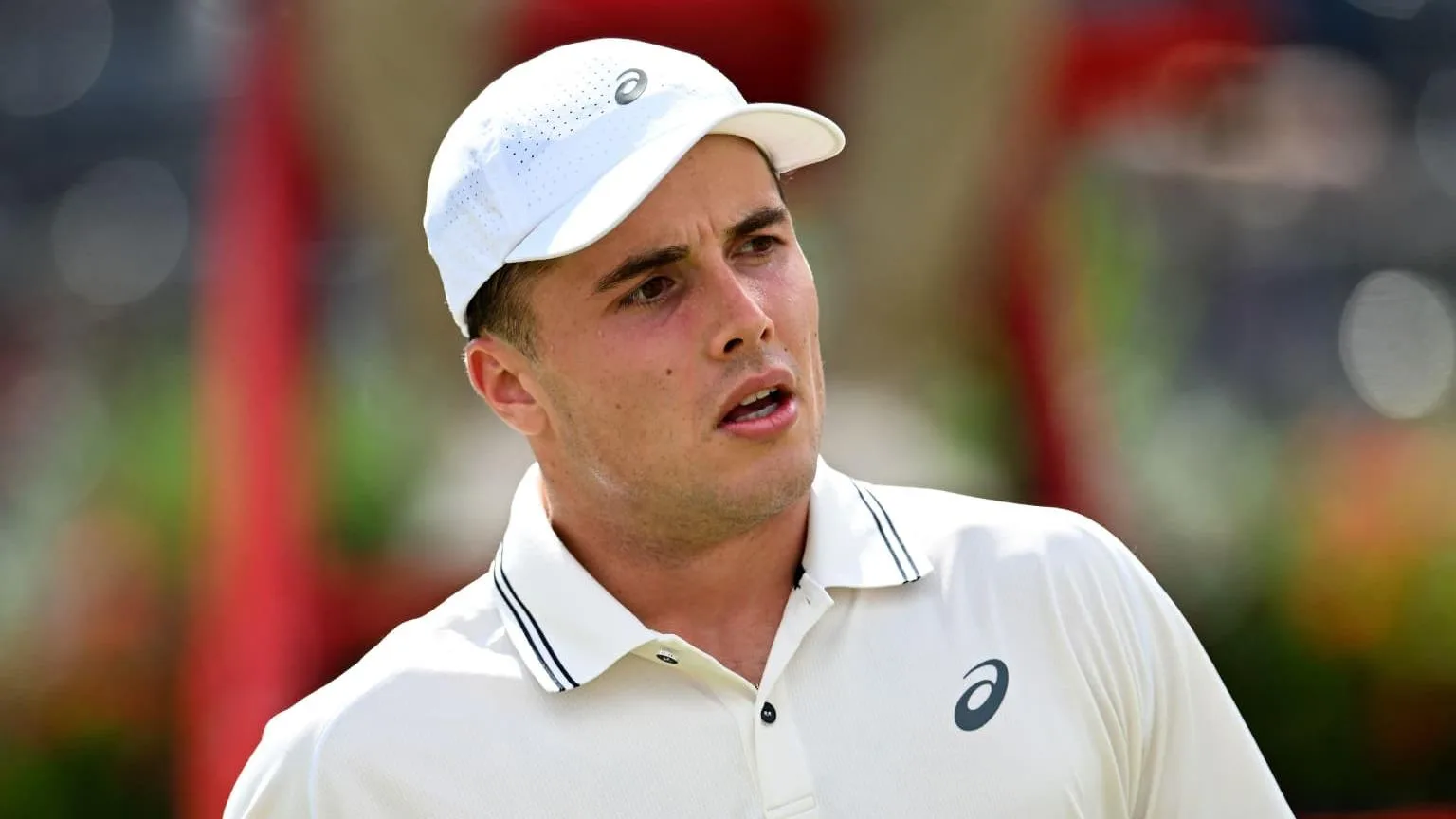
Arthur Fery’s rise this season has prompted a simple question: how much of it can he carry beyond grass? As the North American hard-court swing approaches, the Brit’s ability to reproduce his summer form on other surfaces is under scrutiny.
Fery began the year outside the top 150, ranked 189th, but his results at Queen’s and Wimbledon transformed his standing. A quarter-final run at Queen’s and a place in the Wimbledon semi-finals have pushed him inside the world’s top 40.
The 24-year-old has already shown he can compete away from grass in isolated moments. At this year’s Australian Open, he came through qualifying and beat Flavio Cobolli in straight sets. Still, most of his ranking points in 2026 have come from grass, leaving the hard-court question largely unanswered at the highest level.
His Challenger and ITF Tour titles have all been collected on hard courts, but the challenge now is different. With his ranking elevated and the expectations higher, the coming weeks will help determine whether that success can translate into the stretch that matters most before the US Open.
Tennis content creator Gill Gross believes the 5ft 9in player could find life tougher once he moves away from grass, pointing to a lack of firepower compared with what the surface allows him to mask. On his YouTube channel, he said, “What you will see on grass, as a player whose dominant groundstroke weapon is the backhand, that’s a much easier thing to take to the promised land on grass. Because you get that skid through on the court, it rewards the flatter ball; ultimately it rewards precision and covers up a lack of ball speed and weight of shot.
“If you get on a grittier surface with more friction, that lack of weight on anybody’s two handed backhand, even if you’ve got a big one, it is still not as big as forehands, that lack of weight of shot is punished much more and it’s a lot harder to do productive damage with a backhand when you’re not on grass.
“I think the way he was moving on the surface and his net rushing was incredible, he’s got a bit of an underpowered serve but he was hitting his spots enough. The serve is fine.
“I loved watching him. The real answer is, I look at how comfortable and suitable he was to the grass courts and I am definitely thinking I want to see what he does on hard courts and I am assuming he is going to really struggle on clay. But I expect him to be a player, stay at tour level, and be somebody who continues to be dangerous on grass.”
Fery has delayed his return to the ATP Tour after Wimbledon, with the Brit saying he may skip the Canadian Masters in August. He is expected to play Cincinnati and Winston-Salem before heading to Flushing Meadows.
With few points to defend, Fery has a realistic route to keep climbing if he strings together victories. A strong run could even leave the right-hander in position to break into the top 20 before the end of the year.

ATP Tour ATP Tour News
Rusedski points to Alcaraz’s busy schedule in wrist injury discussion
Rusedski links Alcaraz’s wrist injury to overplaying and says the schedule needs balance.
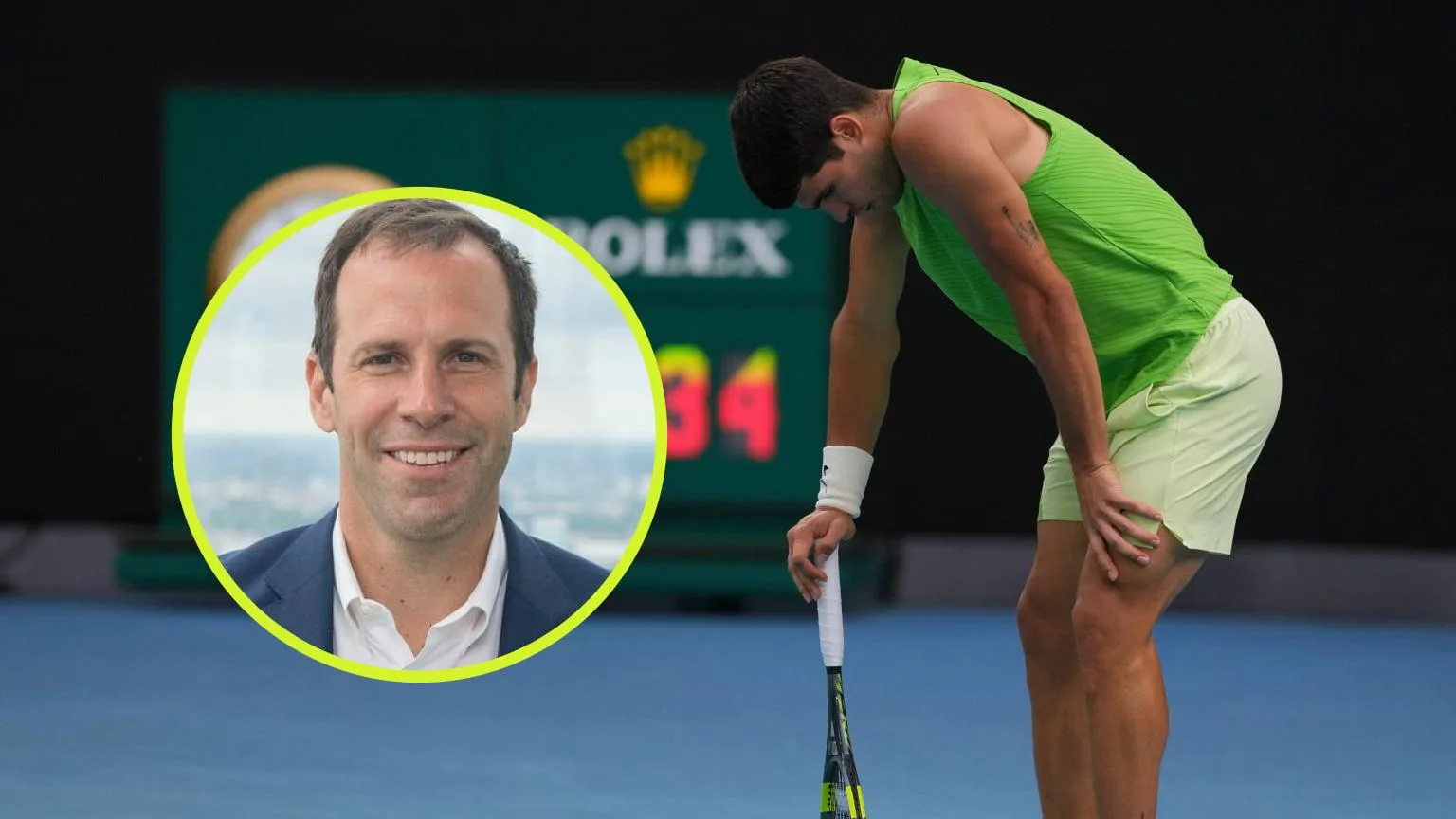
Greg Rusedski has suggested that Carlos Alcaraz’s wrist problem may have been the result of overloading his schedule, and he said exhibition appearances did not help.
Alcaraz was riding high after becoming the youngest man to complete the career Grand Slam when he won the Australian Open at 22. For a time, he appeared to be pulling clear of the rest of the ATP Tour, including Jannik Sinner. But Sinner responded by winning the Sunshine Double and then beating Alcaraz in the Monte Carlo Masters final.
A wrist injury then emerged in mid-April and kept Alcaraz out for more than four months. The 23-year-old has returned strongly at the US Open, yet he has already indicated that he wants to build more rest into his future planning.
Alcaraz told reporters this week, “ In the future, I’m going to take some breaks. Maybe not four months, but one month, two months, missing some tournaments, because it’s impossible to play them all.”
Rusedski, a former US Open finalist, believes the issue is about balance and said he thinks Alcaraz and his former coach Juan Carlos Ferrero may have disagreed over the value of exhibition events. On Off Court, he said, “Well, I think a certain coach by the name of Juan Carlos Ferrero was talking about stop chasing the money at the exhibitions, let’s get a proper schedule, let’s figure out how we’re going to work this financially between the two of us, and he’s finally figured it out.
“Why did he [Alcaraz] get injured? He overplayed. It’s as simple as that. You cannot play every exhibition during the off season, expect to be fit and not break down. It’s humanly not possible, no matter how great you are.”
Ferrero had previously defended Alcaraz’s decision to play exhibitions ahead of his match against Frances Tiafoe in Puerto Rico in February 2025, saying, “They allow you to relax a little, they are played in a different way. But there’s a certain level of intensity and demand. Playing this type of match with a smile, putting on a show for the fans, it always helps to relax a bit.”
Rusedski also noted that Alcaraz played the second-most matches behind Alexander Zverev in 2025, while also appearing in the ‘Netflix Slam’ with Rafael Nadal in 2024, the Six Kings Slam in the past two years, and with Joao Fonseca in Miami in 2025.
He concluded that Alcaraz will need to manage his body more carefully going forward and accept that every exhibition cannot be part of the calendar.
ATP Tour ATP Tour News
Alcaraz powers through US Open opening week after injury layoff
Alcaraz is through the US Open first week in control, and now faces Tommy Paul next.
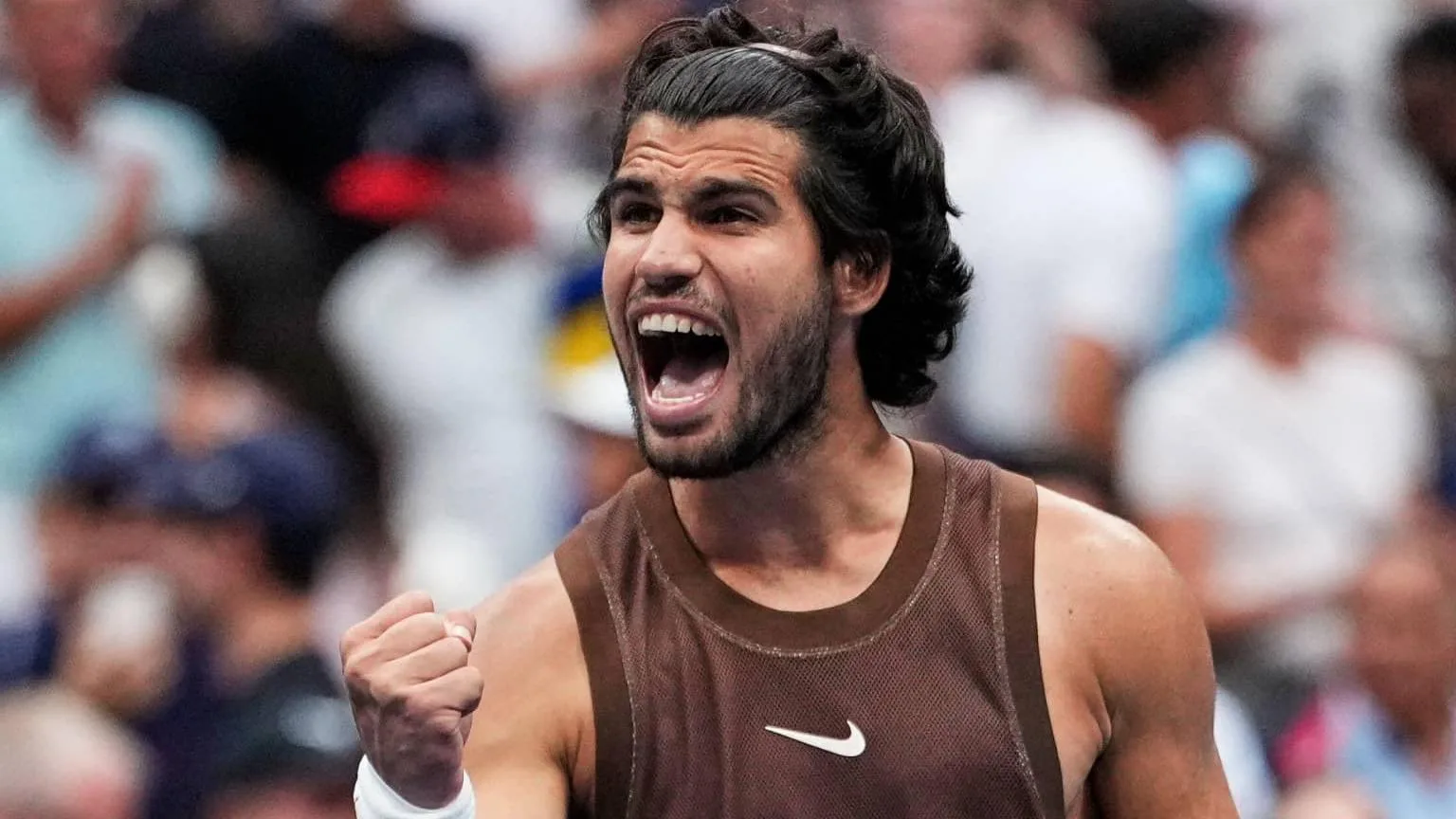
Carlos Alcaraz has moved through the opening stages of the US Open with the kind of control that has made him the player to beat.
After not competing since April, the Spaniard has returned to action in New York and taken care of Roman Safiullin, Jaime Faria, and Wu Yibing to reach the fourth round. He has lost only one set across those three matches, and even with a serve that still appears below his best, he has looked composed, sharp, and increasingly convincing.
His next assignment is against Tommy Paul on Sunday, 6th September, with the order of play still to be confirmed. Even so, the match is expected to be on Arthur Ashe Stadium. It is shaping up as his most demanding test so far, and the level of opposition does not get lighter from there, with Ben Shelton and Frances Tiafoe among the names waiting in the next phase of the event.
For all that, the opening week has largely unfolded in Alcaraz’s favor. While he has advanced with relative ease, several of his rivals have already exited. Novak Djokovic, Felix Auger-Aliassime, Alex de Minaur, and Arthur Fils were all beaten in the first week, while Alexander Zverev, the top seed, has been pushed to five sets in both of his opening matches against Lorenzo Sonego and Quentin Halys, with both contests stretching into the early hours.
There had even been doubt in some quarters about whether Alcaraz would take part in singles at all, despite his mixed doubles debut alongside Serena Williams. Marion Bartoli addressed that speculation on Sky Sports Tennis after that defeat, saying: “When he played the mixed doubles with Serena, and they lost the second match, the rumours going around with different coaches was that he was not going to take to the court in singles,” said the Frenchwoman.
She added: “That was the rumour going into the players’ area. But he is through the first week and breezing through it. He has done the job perfectly. He has been on point with the mentality as well. He was fist-pumping a lot, having a lot of energy. You can see it is a joy to be out there.”
ATP Tour
Alcaraz and Paul set for US Open fourth-round meeting after contrasting paths
Alcaraz and Paul bring contrasting form and a familiar rivalry into their US Open fourth-round clash.
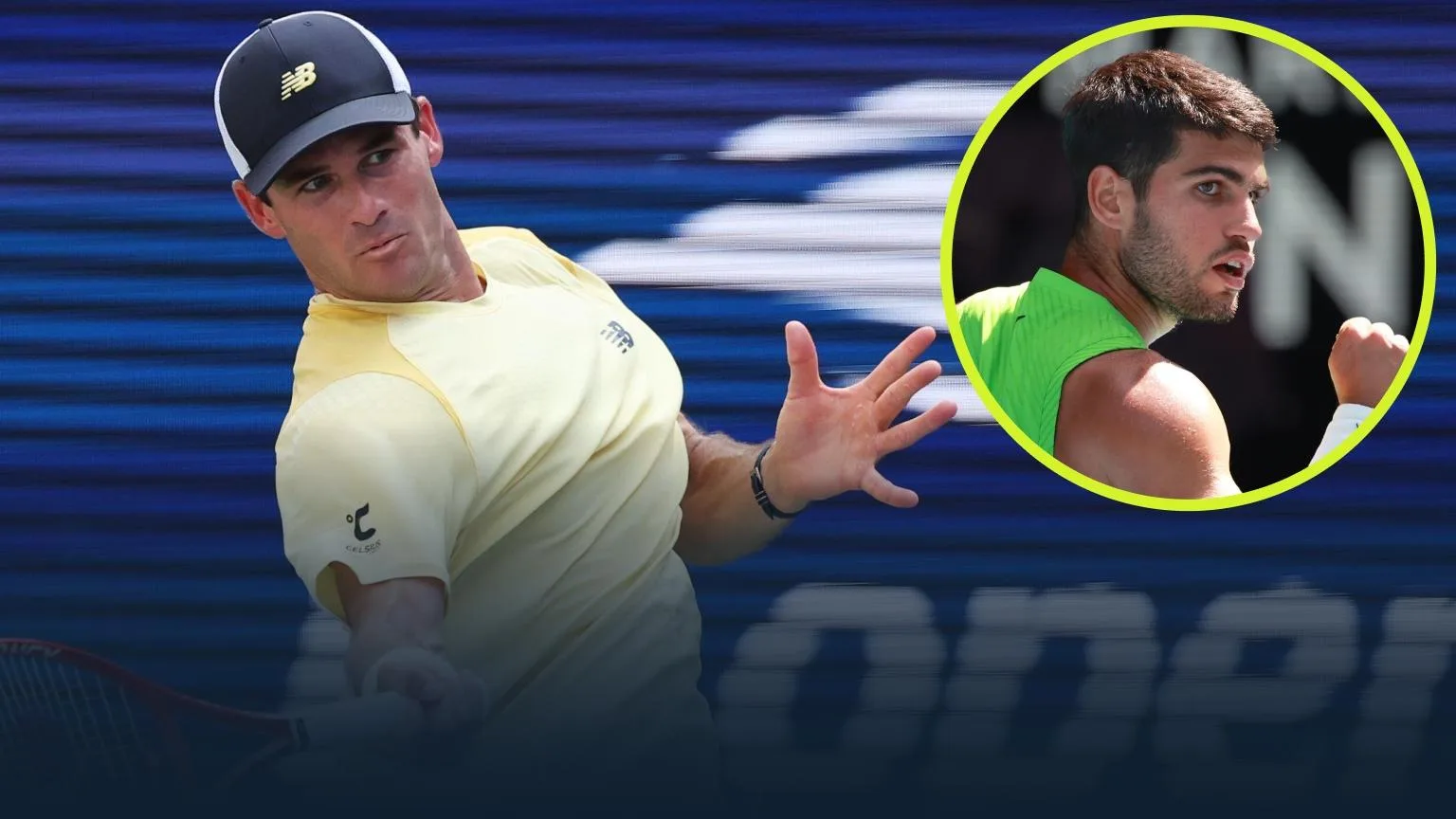
Carlos Alcaraz and Tommy Paul will meet in a compelling fourth-round contest at this year’s US Open.
Alcaraz has moved through the draw with minimal trouble, despite his recent return from a knee injury. The Spaniard has already accounted for Roman Safiullin, Jaume Faria, and Wu Yibing to reach the last 16.
Paul has taken a far more demanding route. The American has come through three hard-fought matches against Coleman Wong, Dino Prizmic, and Alexander Bublik, with the meeting against Bublik going the distance in five sets.
That run has left Paul convinced he can offer Alcaraz a serious examination at his home major. After his latest win, he said: “It’s crazy to be playing against Carlos again. I’d say he’s the player I’ve faced the most times on the entire tour. We’ve had some great battles, but he’s also given me a few beatings.
“Both he and Sinner are the dominant players and the ultimate test for everyone else. I’m going to give it my all; I want to play my best tennis because I know I’ll need it to beat him. I refuse to step onto the court thinking I can’t beat any opponent.
“I always go out there with the mindset that I have what it takes to win. I expect we’ll play in Arthur Ashe Stadium, and maybe it will be a night session. I know people love him in New York, but I hope they’ll cheer me on.”
The pair have met eight times on the ATP Tour, with Alcaraz winning the last five. Paul has two victories in the rivalry, both at the Canadian Open in 2022 and 2023, while Alcaraz has also beaten him in Miami and Cincinnati.
Their meetings have already covered the Australian Open, Wimbledon, and Roland Garros, all of them won by Alcaraz. Their most recent match came at the 2026 Australian Open, where Alcaraz won in the round of 16 before going on to claim the title.
The US Open clash is scheduled for Sunday, 6th September, with the order of play still to be confirmed. Arthur Ashe Stadium is the most likely setting.

Carlos Alcaraz powers past Tommy Paul to move into US Open quarter-finals

Rusedski backs Alex Eala to reach Grand Slam heights after US Open setback

Eala’s US Open run points to a bigger future after Jovic classic

Alcaraz Confronts On‑court Microphones During US Open Practice Ahead of Opelka Match

Raducanu Arrives at US Open With Momentum After Strong Hard‑Court Swing