125 ATP LAYJET OPEN
Choinski captures LAYJET OPEN title, targets Vienna qualifying
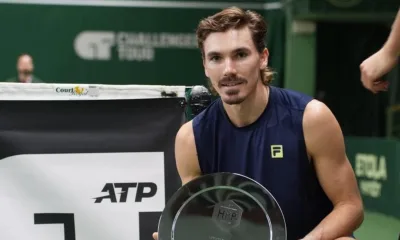
Unseeded Jan Choinski won the LAYJET OPEN his third title this year, and aims for Vienna qualifying.

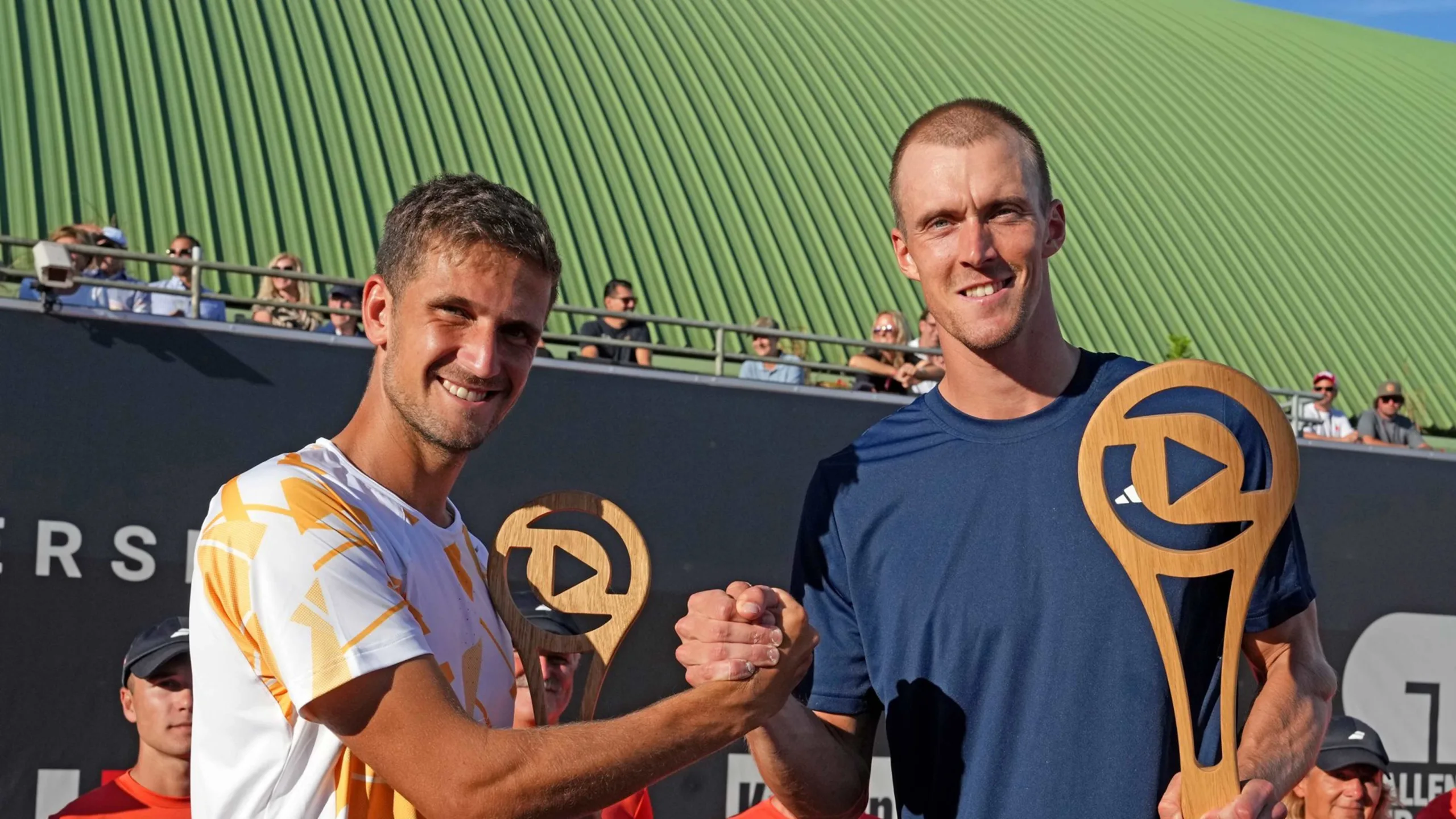
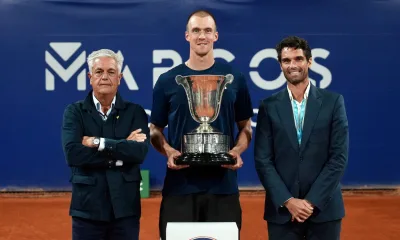
Jan Choinski produced a composed performance to claim the LAYJET OPEN crown, defeating second seed Vit Kopriva 7-5, 6-4 in the final. The 29-year-old Brit opened strongly, racing to a 4-0 lead in the first set before Kopriva recovered to level at 5-5. Choinski regained the advantage, converting his fifth set point after one hour. In the second set both players held to 4-4 before Choinski broke again and closed out the match after one hour and 45 minutes.
“I’ve been playing really good tennis since the second round,” Choinski said of his biggest success this season. “My clear goal now is to earn enough points to get into the qualifying draw of the ATP 500 event in Vienna.”
Born in Koblenz to a British mother and a Polish father, Choinski holds British, Polish and German citizenship. He initially represented the German Tennis Federation but switched to Britain in 2018, citing “better conditions and support.” His route to the title included a dramatic quarterfinal in which he saved match points and edged qualifier Marko Topo 8-6 in a deciding set tie-break. Now based in Dubai, he trains with coach Günter Bresnik.
The win was Choinski’s sixth ATP Challenger Tour title and his third this year, after victories in Troyes and at the Dutch Open in Bunschoten. He earned €25,740 and 125 ATP Ranking points.
Austrian Tennis Federation Vice President Jürgen Roth praised the tournament: “We’re extremely pleased this Challenger has established itself. Our thanks go to tournament director Sascha Freitag and all the volunteers, sponsors and partners who make it possible. Tennis enthusiasm in Austria had dipped a little, but with Davis Cup successes and events like this, it’s coming back.”
Elsewhere on the Challenger circuit, Moez Echargui won the Saint-Tropez Open, beating Dan Added 6-3, 6-4 to claim his third career Challenger title this season and €15,150 plus 125 points. Franco Agamenone lifted the Intaro Open trophy, defeating Jay Clarke 6-3, 6-4 for his fifth Challenger title. In Argentina, Emilio Nava beat Alex Barrena 6-3, 6-3 to win the AAT Challenger Santander, his sixth Challenger title and fourth this year; he earned $14,200 and 75 points. Michael Zheng won the Columbus Challenger, defeating Martin Damm 3-6, 6-3, 7-5 to secure his second Challenger title and $14,200 with 75 points.
The ATP Challenger Tour continues across multiple continents this week.



1000 125
Sabalenka voices concern as US Open confronts dual controversy
Sabalenka and Gauff speak on US Open problems as controversy grows around the event.
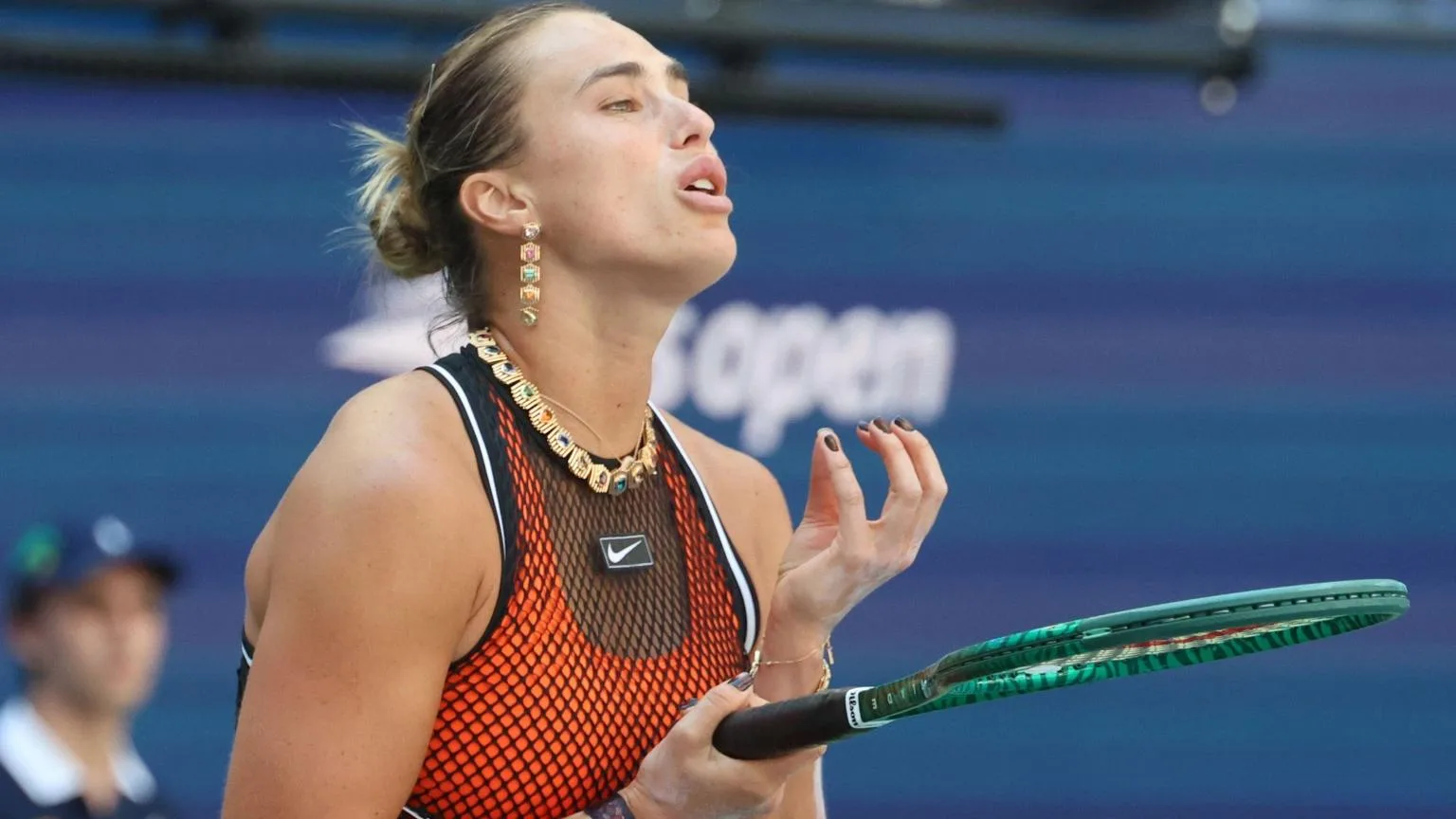
[The 2026 US Open is dealing with a growing credibility problem in the middle of the tournament, and world No 1 Aryna Sabalenka has become the latest leading player to raise her voice on an issue that appears difficult to fix.
During her third-round match against Kamila Rakhimova, Sabalenka paused play in Louis Armstrong Stadium to complain to the umpire about the smell of weed. Her decision to stop the match underscored a concern that British No 1 Katie Boulter had already mentioned earlier in the event.
“Someone is smoking weed,” Sabalenka told the umpire. “Would you mind to (tell them to deal with it) because it’s so strong?”
She returned to the subject after the match and made her position clear in the press conference.
“Guys, you can relax any way you want and you can smoke anything you want, but please don’t do it around the tennis court.
“It’s a bit tricky to handle that smell while you are trying to perform at your best. There is nothing else to say about weed. I’m just asking people not to smoke it around the tennis court.”
The issue has now been acknowledged by several players, leaving USTA officials with a problem that is proving awkward to solve. Yet another storyline, of their own making, has also begun to dominate the conversation.
Tournament organisers have brought in influencers to help promote the event, and their presence has quickly become one of the biggest talking points. Matches have been interrupted while social media creators film videos and promote products during points, with Naomi Osaka left unimpressed.
Coco Gauff took a more measured view, but she was still firm that tennis etiquette must be respected.
“I think it’s great to have a different demographic to the sport, and I think I have no problem with influencers,” said Gauff.
“I have met some of them and follow some of them online. Luckily, the ones I do follow online do follow the etiquette and know tennis pretty well.
“I think it’s like any venue you come to, you have to follow the etiquette towards it. I think it may be on some of the brands, too, maybe to have, like, a sign plastered or something in the suites so that they know. Because, you know, sometimes it’s their first tennis match. They don’t know. They have probably been to basketball games before.
“But I definitely think no flash photography, because that does bother [us], and I am one of the more lenient players. There is very few times you hear me complain about noise. The flash (light)… definitely no flash in the points and try not to talk too loud.
“But like with anything, any venue you go to, like if you’re being invited to a red carpet, you wouldn’t show up in jeans. I think it’s just, follow the etiquette of the sport. That’s all.”
Unless the USTA changes course and stops giving these guests tickets in seats that are worth thousands of dollars, the debate is unlikely to fade. With Instagram and TikTok overflowing with images of influencers promoting themselves and their brands, the question remains whether tennis is actually gaining new fans. For now, the tournament’s news cycle is being shaped by problems that are damaging its image.
1000 125
Sabalenka’s frustration spills over after US Open press exchange
Sabalenka bristled after a media question and doubled down on her criticism of online detractors.
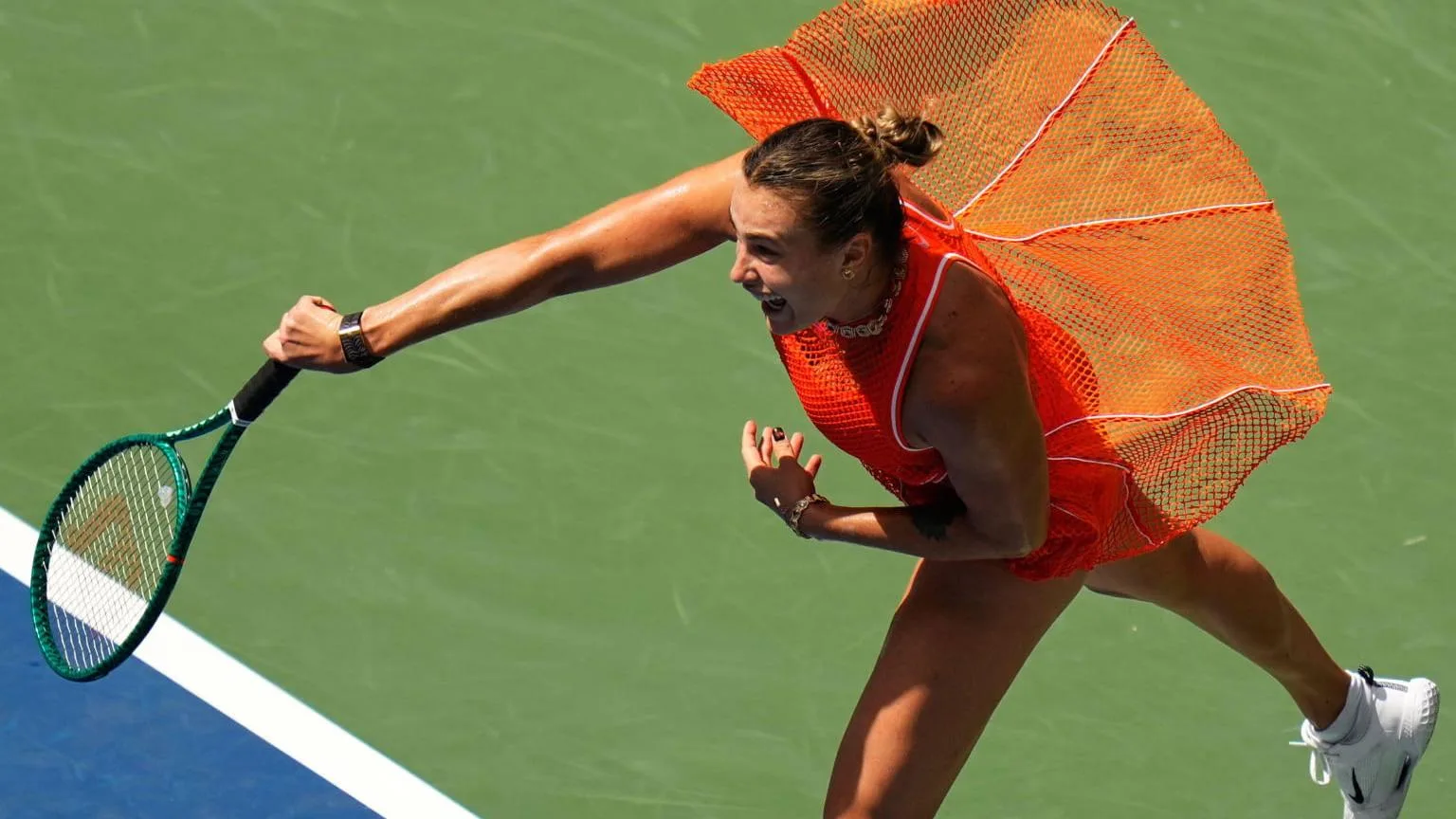
Aryna Sabalenka’s irritation finally surfaced after her second-round match at the US Open, where questions around her off-court commitments and focus brought a sharp response from the world No. 1.
The setting was a familiar one. Grand Slam tennis asks players to move through a relentless schedule of press obligations, including interviews after every match, media day appearances before the tournament and, for those who reach the final stages, repeated encounters with reporters over more than two weeks. Many players have long made clear they would rather not have to do it.
Sabalenka, however, has been especially sensitive to recent scrutiny. In the days before the US Open, she had taken part in several sponsor product launches in New York, and she did not react warmly to suggestions that her commitment to training had been called into question. She appeared to view one line of questioning as an unfair insinuation about partying before a major event.
“Are you guys like a joke? Party is fun. Like, why would you even say that? Why would you even think about that? Like what kind of question is that? Like just because I posted like some activities with brands and you think that I’ve been fighting, not training.”
When the reporter tried to clarify the point, Sabalenka replied, “You literally said that. Next question. Oh, yeah. I wasn’t serious before that. Next question.”
Her frustration did not begin there. Earlier in the tournament, she was asked on Sky Sports whether criticism affects her, and she answered in blunt fashion. “Honestly, it took me a little while to shut down those noises. It’s always going to be people who support your choices, people who go against that, people who love you, who hate you. And I’m like, I’m so tired of those miserable haters.
“So I decided to stay really, you know, stay strong with myself and trust the process, trust myself, trust with my choices, with my taste, and whatever. And whoever loves me, they’re going to be there for me no matter what.
“Haters? Honestly, I don’t want to curse here right now, but they can go and have fun with their own lives
“Whatever people are saying on the internet, I heard they probably didn’t like it.”
The wider criticism intensified after she agreed to play Nick Kyrgios in the ‘Battle of the Sexes’ match last December. For now, though, Sabalenka appears determined to carry that edge with her in New York as she chases another US Open title.
125
Roddick pushes back on US Open ticket price criticism
Roddick says US Open ticket outrage misses the real issue: resale prices and secondary market dynamics.
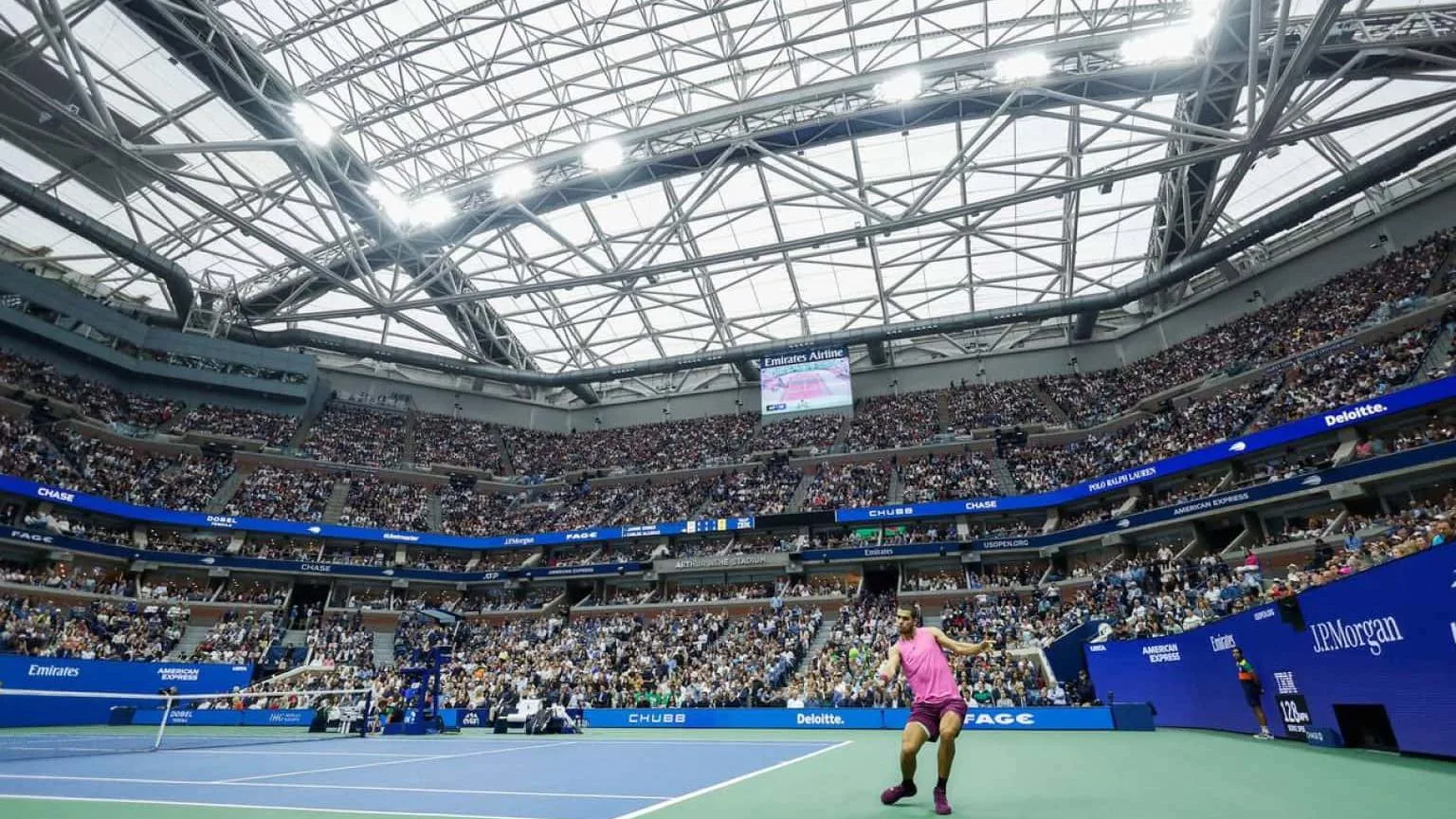
Former champion Andy Roddick says the reaction to this year’s US Open ticket prices has been misdirected, arguing that the loudest criticism is missing how the market works.
Attention around the men’s final at Arthur Ashe Stadium intensified after the top ticket price passed $20,000. The resale market has since driven that figure even higher, with listings reaching $34,944.18. That eye-catching number has prompted fresh debate about affordability, but Roddick insisted the USTA is not the party benefiting from those prices.
“Smart people are getting on an opinion that benefits themselves, right?” said Roddick on his podcast.
“They do this without mentioning secondary marketing and how the pricing actually works once it’s out of the USTA’s hands—which you have to go through.
“So listen, just have a nuanced argument. Is it overpriced? Is it too expensive? Hell yes, completely agree on that. Absolutely, we’re not arguing that it’s not. This sucks.
“But to say the USTA are charging these prices is categorically false. The issue here is the ticket resale market.”
Former British No 1 Greg Rusedski also addressed the surge, describing resale prices as “crazy” and questioning how many fans could realistically absorb the cost of attending with another ticket added on top.
“You gotta buy two tickets and bring a date for you, so it will be an expensive night if you are buying on the resale market,” said Rusedski on his podcast.
“It’s crazy what some people will pay for tickets, but I guess it’s supply and demand. And you know, you are in New York City, which is one of the most expensive cities on the planet at the moment, especially with inflation.
“So there are some wealthy individuals who can manage to do those things, but I’m quite shocked by those prices. I’m glad I don’t have to pay for tickets when I go to the US Open.
“There’s got to be some balance for the fans and prices of tickets. If you’re charging that much money for people, and you know, people’s wages haven’t gone up at that rate. So they still have to make it affordable so you can have your regular fan get in there and not put themselves in debt or put themselves in these situations. And that’s where you gotta find the balance.
The USTA is not collecting those inflated resale sums, with secondary sellers and companies like Ticketmaster benefiting instead from tickets initially bought at face value.

Alcaraz’s schedule rethink finds support from Sabalenka

Alcaraz’s schedule talk prompts debate over future tournament choices

Sabalenka voices US Open frustration over court-side smoke complaints

Alcaraz Confronts On‑court Microphones During US Open Practice Ahead of Opelka Match

Raducanu Arrives at US Open With Momentum After Strong Hard‑Court Swing