
Grand Slam Player News Wimbledon
Amanda Anisimova vows to return stronger after being ‘frozen’ with nerves during Wimbledon final defeat
Anisimova showed resilience by completing her on-court interview after the final.

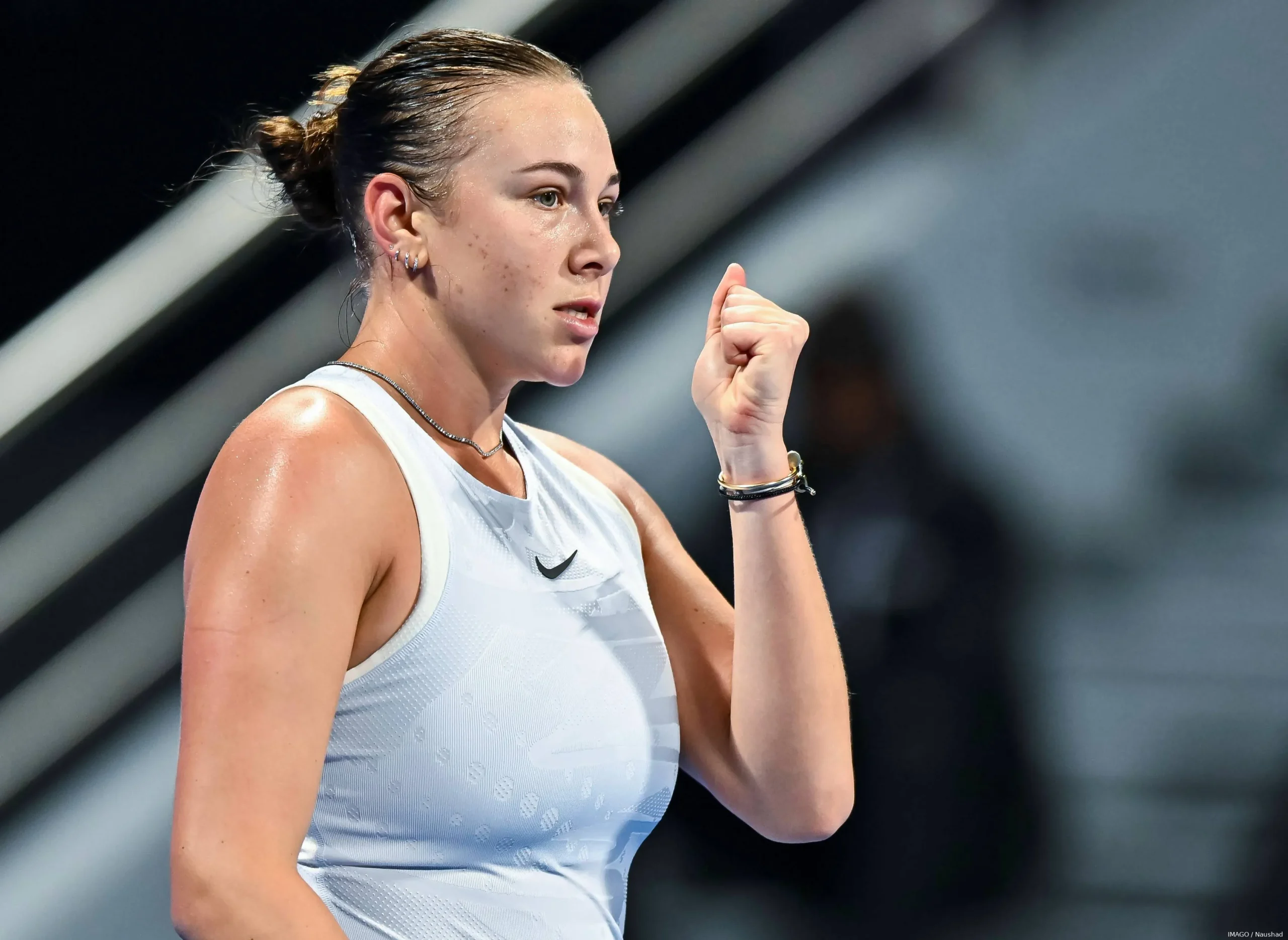
It was billed as the Wimbledon women’s final that no one expected, it finished as a match that American rising star Amanda Anisimova will want to forget.
The 23-year-old always knew she was up against it, playing in her first grand slam final against a five-time major champion who has seemingly reinvented her game on grass.
But even the biggest Iga Świątek fan would never have predicted the 6-0, 6-0 thrashing that played out on Centre Court on Saturday.
The demolition job took less than an hour. It was also the first time since 1911 that a Wimbledon women’s final was won without the champion dropping a single game.
Everything went wrong for Anisimova, while everything went right for Świątek. The perfect storm, with two very different outcomes for either player.
“I think I was a bit frozen there with my nerves and maybe the last two weeks I got a bit tired,” a very poised Anisimova told reporters during her post-final press conference.
“It was a bit tough to digest, obviously, especially during and right after. It’s not how I would have wanted my first grand slam final to go.
“I think I was a little bit in shock after as well, but I told myself I’ll definitely come out stronger after this.”
Despite the heavy defeat in the final, we must not forget the incredible tournament that Anisimova has had at SW19 this year.
No one really tipped the world No. 12 for a title run on the grass, there were simply too many better players, with too much experience in this competition.
But as the big names dropped out of the women’s draw, Anisimova kept getting closer to her maiden grand slam final.
Then came a semifinal against world No. 1 Aryna Sabalenka. Ask Anisimova today and she might say she wished her tournament ended after that brilliant win.
The American showed everything that is great about her game against Sabalenka: Her booming backhand drawing gasps from the Centre Court crowd who started to fall in love with the youngster.
But, in truth, none of that form was on display during Saturday’s final. Her serve was left wanting and 28 unforced errors just demonstrated what state of mind she was in.
In her post-match comments, Anisimova said how she had struggled with the heat during the semifinal and thought that maybe could have caused her level to drop in the final.
She also said she felt fatigue during her warmup, but didn’t want to take anything away from her opponent’s “incredible” performance.
Showing courage in defeat
Straight after the match, Anisimova somehow mustered the courage to conduct her on-court interview, something that has become tradition at Wimbledon over the decades.
After brushing away the tears, she managed to speak so eloquently about what must have felt like one of the most difficult moments of her career.
But while she explained how she simply “ran out of gas” in the final, the love she showed her family and friends in the player’s box spoke volumes about the journey she’s been on.
In 2023, Anisimova stepped away from the sport, deciding not to touch her racket for months while she combatted what she described as burnout.
The time away from tennis was to help her own mental health, which had suffered after several seasons on the hamster wheel that is the professional tennis tour.
If bouncing from hotel to hotel is not enough, each tennis match is like a psychological game of chess. It’s no wonder that teenage prodigies, like Anisimova was, can quickly get tired of it all.
During the break, Anisimova said she learned a lot about herself, spending time with the people she loves and exploring new hobbies, one of which was art.
In 2024, she returned and set out proving people wrong.
After her semifinal win at Wimbledon, Anisimova told reporters that people had said she would never reach the top of tennis again after taking such a long break.
She previously said it was a “special” feeling to show how wrong doubters were at SW19 this year.
“My fighting spirit has gotten me to the final today,” she said as her tournament came to an end.
“It wasn’t me playing perfect. There were matches where I struggled and I wasn’t playing to my full potential, but I think just me staying focused and fighting my way through certain moments and focusing and also lifting myself up and trying to not get negative on myself was the most important thing.”
No one needs to tell Anisimova that there will be brighter moments in her career to come.
If anything, this tournament has shown her game is good enough to reach a grand slam final while still having plenty of areas to improve – and that’s exactly what she’s promised to do going forward.
First, though, the more important things. Anisimova vowed to spend some much-needed time with her family and friends after they showed so much support throughout the tournament.
Whatever comes next in her career, though, you get the sense it will be driven from the feeling she felt on Centre Court during this year’s final.
“There’s a lot of improvement,” she said. “If anything, I think it’s more experience for me on how to handle nerves. It’s my first grand slam final, so at least I have that experience now.”

ATP French Open Grand Slam
Auger-Aliassime Reaches Career-High No. 4 After Breakthrough at Roland Garros
Auger-Aliassime rises to No. 4 after best Roland Garros run, tying second-highest Canadian rank. Now
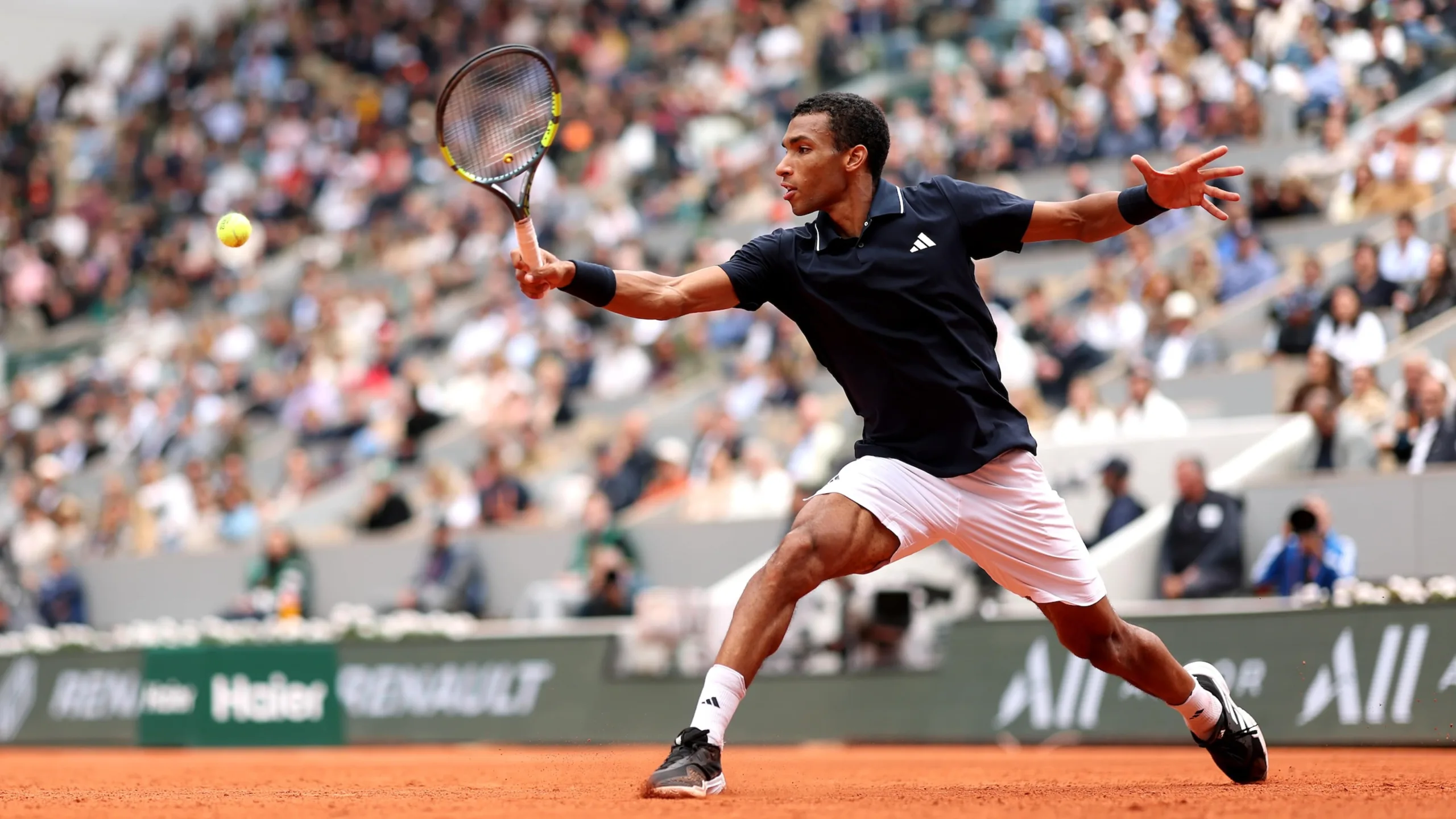
Felix Auger-Aliassime moved to a career-high No. 4 in the ATP rankings following his deepest run at Roland Garros, where the 25-year-old reached the quarterfinals for the first time before losing to eventual finalist Flavio Cobolli. The result completed a personal Grand Slam milestone: having previously reached the quarterfinals or better at the Australian Open, Wimbledon and the US Open, he became the first Canadian man to reach the quarterfinals or better at all four majors in his career.
The rise from No. 6 to No. 4 surpasses his prior best of No. 5 and places him tied for the second-highest-ranked Canadian in ATP or WTA rankings history. The only other Canadians to reach the top four are Milos Raonic and Bianca Andreescu. Raonic went as high as No. 3 in 2016, following his run to the Wimbledon final that year, and Andreescu peaked at No. 4 in 2019 after winning the US Open.
Canadian tennis has seen seven players reach the top 10 in either ATP or WTA history, with official rankings available since 1973 for the ATP and 1975 for the WTA.
Auger-Aliassime still has ground to cover to move higher in the standings. He is 2,865 points behind the current world No. 3, Alexander Zverev, with the rankings showing Zverev at 7,305 points and Auger-Aliassime at 4,440.
The Canadian will shift his focus to grass. He begins his grass-court season this week at the ATP 250 event in ‘s-Hertogenbosch, entering as the No. 1 seed. After a first-round bye he will open against either Hubert Hurkacz or Marton Fucsovics.
The new ranking reflects a season of important progress for Auger-Aliassime and cements his place among the highest-ranked Canadians in modern tennis history.
ATP French Open Grand Slam
Flavio Cobolli’s Roland Garros run vaults him into ATP Top 10
Flavio Cobolli entered the ATP Top 10 after his first Grand Slam final at Roland Garros. New ranking
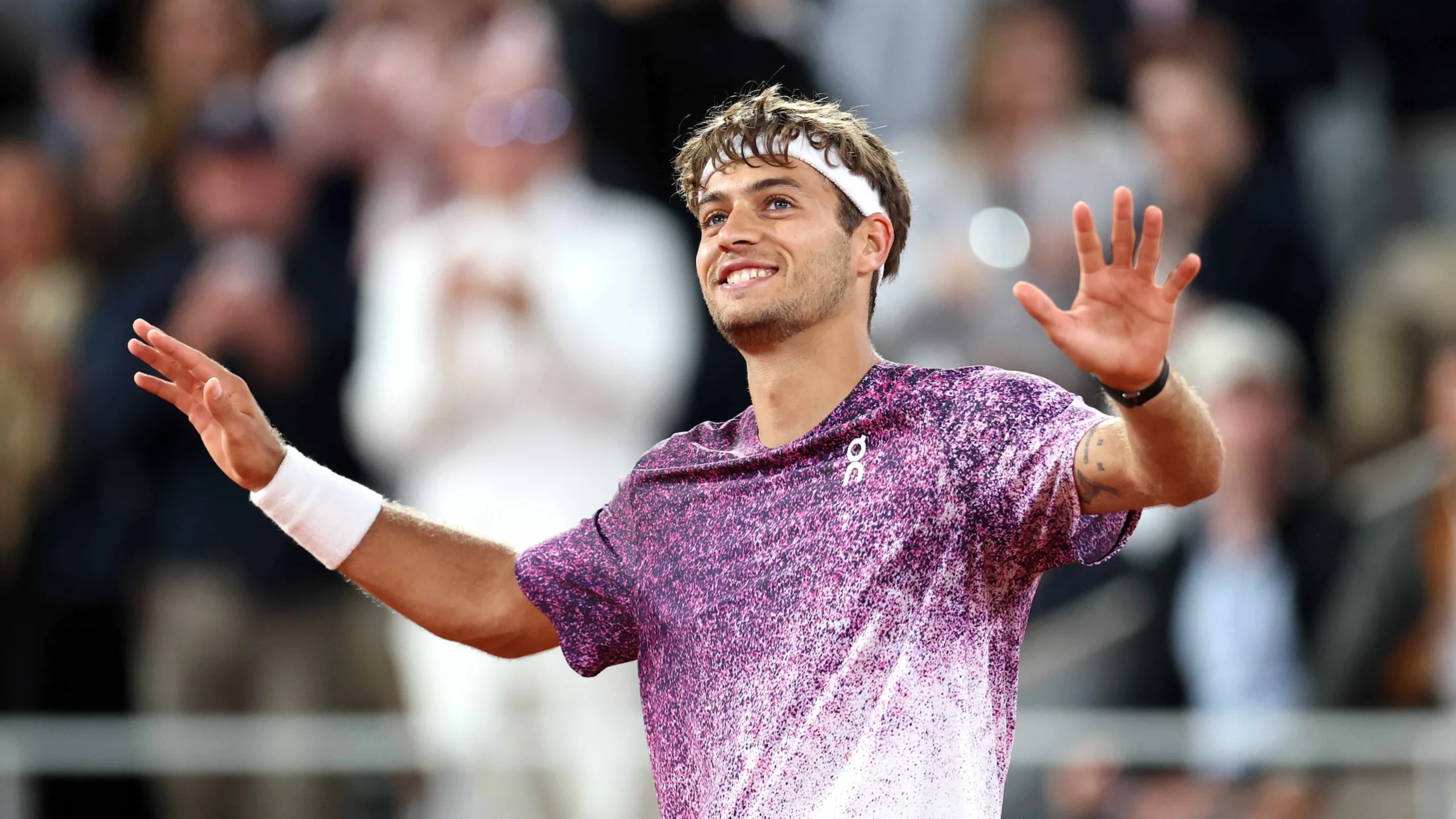
Flavio Cobolli’s breakthrough at Roland Garros produced a major ranking milestone. The 24-year-old reached his first Grand Slam semifinal and final in Paris and, despite losing the title match to Alexander Zverev in a five-set battle, climbed from No. 14 to No. 10 in the latest ATP rankings, marking his Top 10 debut.
Cobolli is the seventh Italian to enter the ATP Top 10 since the rankings began in 1973. He is also only the second Italian man in the past 50 years to contest the Roland Garros final, joining last year’s runner-up, Jannik Sinner. Born in 2002, Cobolli is the fifth man born in 2002 or later to reach the Top 10, following Carlos Alcaraz and Holger Rune, who were both born in 2003, and Lorenzo Musetti and Ben Shelton, who were both born in 2002.
The route to the final carried complicated circumstances. Cobolli advanced to the title match after countryman Matteo Arnaldi withdrew before their semifinal due to illness. Cobolli reflected on the day with mixed emotions: “When [Arnaldi] came to me almost one hour ago, I almost cried,” he said. “It’s something that you don’t expect at all. I was ready to play this match. When he came, I was completely sad for him.
“But at the same time, of course I’m really happy for the result that I reached this week. My dad also came to me right before him, and we had a big hug together with the whole team for achieving the Top 10. Every time that I make the best ranking, we all together have a big hug. We did the same routine as always.
“Yeah, now I’m sad and happy at the same time.”
Arnaldi, 25, leaps from No. 104 to No. 34 after reaching his first Grand Slam semifinal, moving to within four spots of his 2024 career-high of No. 30. Matteo Berrettini also recorded a significant rise, moving from No. 105 to No. 48 after reaching his first Grand Slam quarterfinal since 2022 on the terre battue. For the former No. 6, it was his first appearance at Roland Garros since 2021, following four years marked by injury and illness withdrawals.
French Open Grand Slam
Maja Chwalinska vaults to No. 21 after surprise run to Roland Garros final
Maja Chwalinska rises from No. 114 to No. 21 after reaching the Roland Garros final. into the Top 25
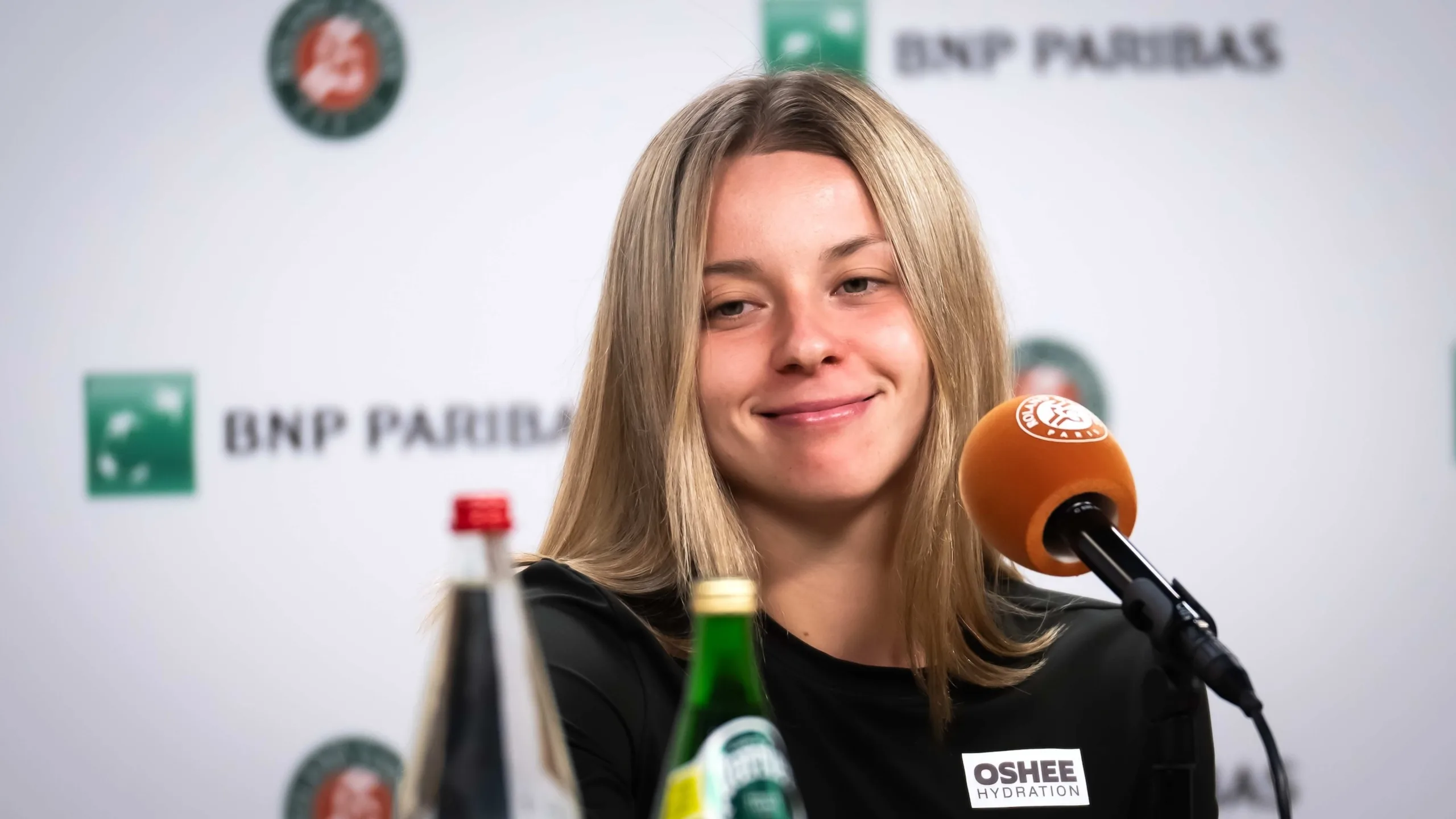
The new WTA rankings produced a major leap for Maja Chwalinska, who climbs from No. 114 to No. 21 after reaching the first Grand Slam final of her career at Roland Garros. The 24-year-old from Poland achieved a sequence of breakthroughs during the clay-court major.
Her run was historically improbable. Chwalinska became the lowest-ranked woman to reach the Roland Garros final in the WTA rankings era, which dates to 1975. She was also only the second player in the Open Era, woman or man, to advance to a Grand Slam final as a qualifier, following Emma Raducanu.
Before the tournament she had never beaten a Top 50 opponent. At Roland Garros she defeated four Top 50 players en route to the title match: Elise Mertens, Maria Sakkari, Anna Kalinskaya and Diana Shnaider. The result smashed her previous career-high of No. 113 and delivered several milestone debuts — Top 100, Top 50, Top 40 and Top 30 — with her ranking finishing just shy of the Top 20.
Asked after the final about the gap in level between the elite and those outside the Top 100, she said: “I know many, many great players that are ranked outside Top 100,” she said. “You know, it’s such a thin line now. I feel like a lot of things need to click, but yeah, for sure there so many great players. Yeah, I wish them all the best. I hope that my story these last days was inspiring for them, and I’ll see them in the—let’s say—Top 50 now.”
With few ranking points to defend until September, there is scope for further gains through the summer. Chwalinska plans a break before returning for the grass season. “I’m not going to play anything before grass, that’s before Wimbledon, that’s for sure. I definitely need some time to recharge,” she said. “Even before Roland Garros, I said that I need vacation after the tournament. So now it’s three weeks that I’m kind of like—not waiting, because I wanted to be here, but I just knew in the back of my head that I’m going for the vacation after French Open.
“Yeah, definitely need some time to recharge.”
The French Open champion, Mirra Andreeva, moves from No. 8 to No. 6, her best ranking this season and one spot shy of the career-high No. 5 she reached last year.

Auger-Aliassime Reaches Career-High No. 4 After Breakthrough at Roland Garros

Emilio Nava takes Neckarcup title after Luka Mikrut withdraws from final

Flavio Cobolli’s Roland Garros run vaults him into ATP Top 10

Alcaraz Confronts On‑court Microphones During US Open Practice Ahead of Opelka Match

Raducanu Arrives at US Open With Momentum After Strong Hard‑Court Swing

Cervara: Ending an eight‑year partnership with Medvedev was necessary to change the energy
-
 ATPFrench OpenGrand Slam2 months ago
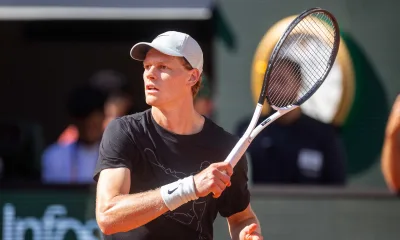
Roland Garros 2026 Preview: Why Jannik Sinner Arrives as the Heavy Favorite
-
 ATPFrench OpenGrand Slam2 months ago
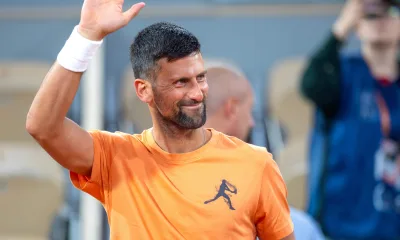
Djokovic upbeat on Roland Garros fitness as he aims for 25th major
-
 French OpenGrand Slam2 months ago
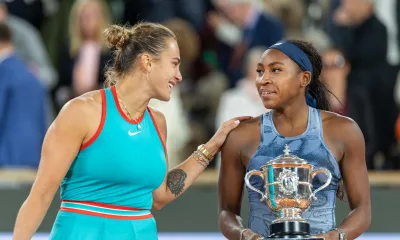
Roland Garros 2026 Women’s Draw Sets Up Potential Sabalenka–Gauff Semifinal