1000 Finals Madrid Open
Andreeva Breaks Down After Madrid Final Loss to Kostyuk
Mirra Andreeva wept after Madrid final defeat, saying each loss feels like the end of the world. She

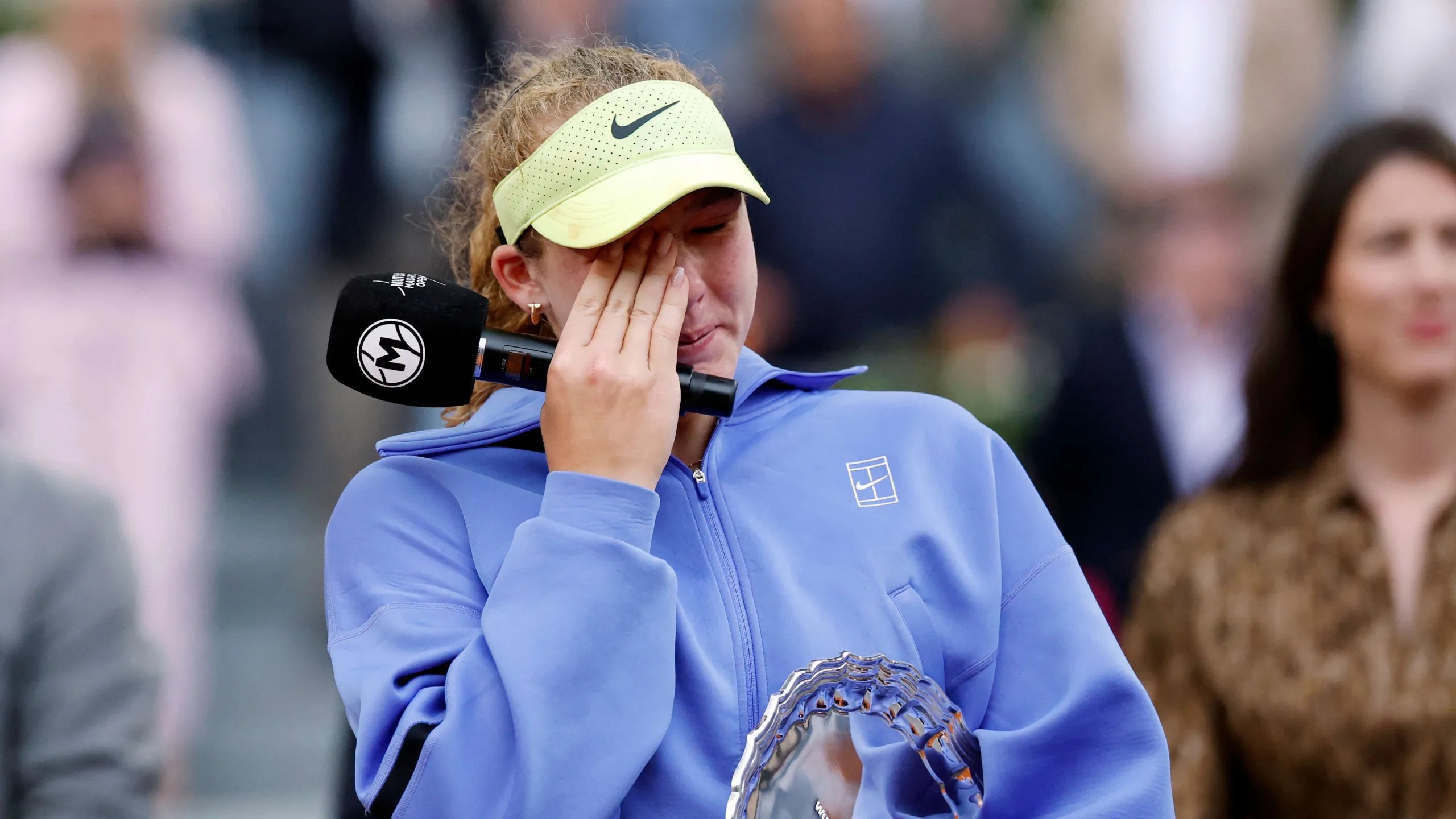
Mirra Andreeva was overcome by emotion following a straight-set defeat in the final of the Mutua Madrid Open, the latest in a series of high-stakes setbacks for the Russian teenager.
Andreeva fell 6-3, 7-5 to Marta Kostyuk, suffering her first career loss in three WTA 1000-level finals. She had used her temperament as fuel earlier in the week but was unable to carry it through while favoured against Kostyuk, losing in just under an hour and a half to the Ukrainian for the second time this year.
Once the match ended, Andreeva sat in her courtside chair and buried her face in her hands before addressing the crowd and her team. She thanked them “for always being there for [her] and supporting me at all times, when it’s easy and when it’s hard.”
As tears came, she said, “I’m sorry. I promised myself I’m not gonna cry. I’m sorry,” and placed her runner-up plate in her line of sight between her and her support team in the stands “because it’s easier like this,” she added. “I know it’s sometimes maybe not easy to work with me. But I really appreciate all your support and everything you do for me.”
Speaking to reporters later, Andreeva acknowledged the depth of her disappointment. “every time I lose, every time it’s like the end of the world to me.” She continued, “I don’t know, sometimes I see other players, like, smile right after the defeat, right after the matches they lost,” and added, “To me, I don’t understand how people do it. I wish I could do it.”
She described losing as “very disappointing and very painful to me,” and voiced a hope for emotional progress: “I hope that maybe in the future this can improve and I can maybe, after the match that I lose, I can talk about it right away and not take some time before starting to talk about it.” Despite what she called a “hard day,” Andreeva said she hoped to lift her spirits with a victory in Sunday’s doubles final alongside Diana Shnaider.

1000
Jack Draper’s Instagram presence disappears amid injury uncertainty
Jack Draper’s Instagram vanishes as injury doubts and US Open questions continue.
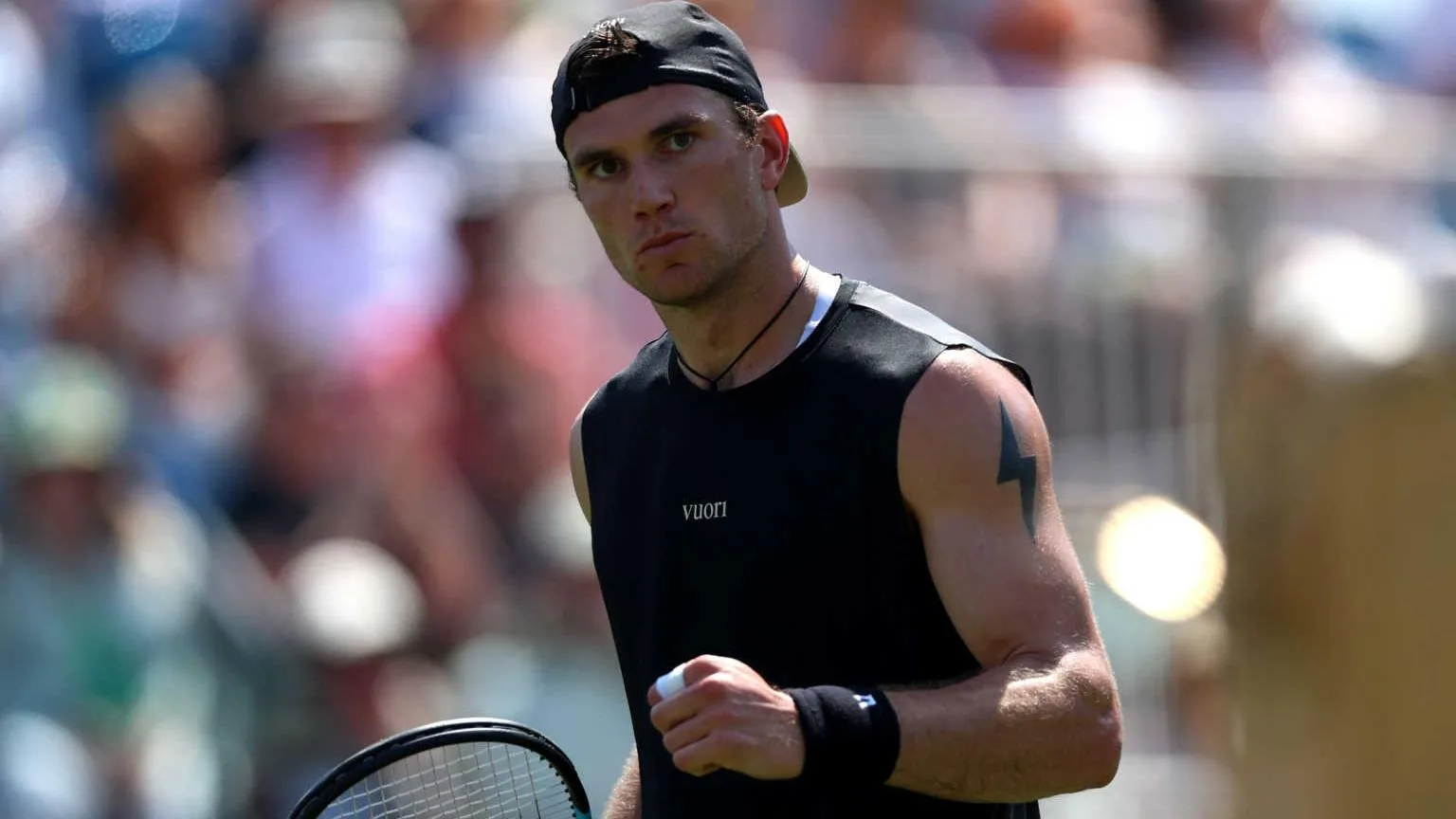
Jack Draper’s Instagram account seems to have been removed, leaving the former British No 1 without a visible presence on the platform.
The account had more than 500,000 followers and was still active last week. In recent days, both the Cincinnati Open and Britain’s LTA had tagged the 2025 Indian Wells Open champion in posts. That no longer appears to be possible, as the link to Draper’s profile is now disabled. When the handle is clicked, it shows: “Sorry, this page isn’t available. The link you followed may be broken, or the page may have been removed.”
There has been no explanation for the decision. That is notable given the value sponsors would place on a player with such a large following, particularly one whose profile has grown alongside his rise to former world No 4.
His social media reach matters even more because his time on court has been limited over the past year. Draper has been dealing with a bone bruising problem in his arm and has struggled to find a way through it.
His recent results have underlined the issue. He broke down in tears on court as he lost at the Montreal Masters earlier this month, and he was again visibly affected in his defeat to Martin Landaluce at the Cincinnati Open earlier this week.
There has still been no official update on whether Draper will play the US Open later this month. He is scheduled to partner Jessica Pegula in the mixed doubles a week before the main draw starts.
If he cannot complete a best-of-three-set match at a Masters event, a Grand Slam, with its five-set demands, would appear an even bigger ask.
Leading injury prevention and athlete welfare expert Stephen Smith has already described the situation as difficult to manage. “I wouldn’t say it’s uncommon,” said Smith. “What we saw at the Canadian Open was genuinely difficult to watch. He’s been navigating that bone bruising injury in his left arm for a significant period, and bone bruising is notoriously slow to resolve.
“What would happen if you keep overloading that is it could end up resulting in a stress fracture, as well. You can’t accelerate that biological process too much. You manage your load around it.
“The drop in his serve speed during the match, they were pretty visible data points that he was having an issue.
“When a player’s serve speed falls that much from their baseline, that’s a flag that something is limiting their ability to generate force through the kinetic chain.
“So, for his comeback to continue, I think the priority has to be honest load monitoring — not just how the arms feel day to day.
“I think there would need to be very, very serious quantification of load, and not just time on court, but the actual physical demands — speeds, impacts, changes of direction, racket speed.”
Draper may still choose to play the mixed doubles at the US Open, since it would be less physically demanding and would also offer sponsor exposure. He signed a lucrative clothing deal with Vuori last year, reported to be worth several million pounds a year, but injuries have limited the number of matches he has been able to play in that kit.
1000
Rybakina closes in on Sabalenka as Cincinnati sets up top-rank battle
Rybakina can still challenge Sabalenka for No 1, but Cincinnati leaves her needing a perfect week.
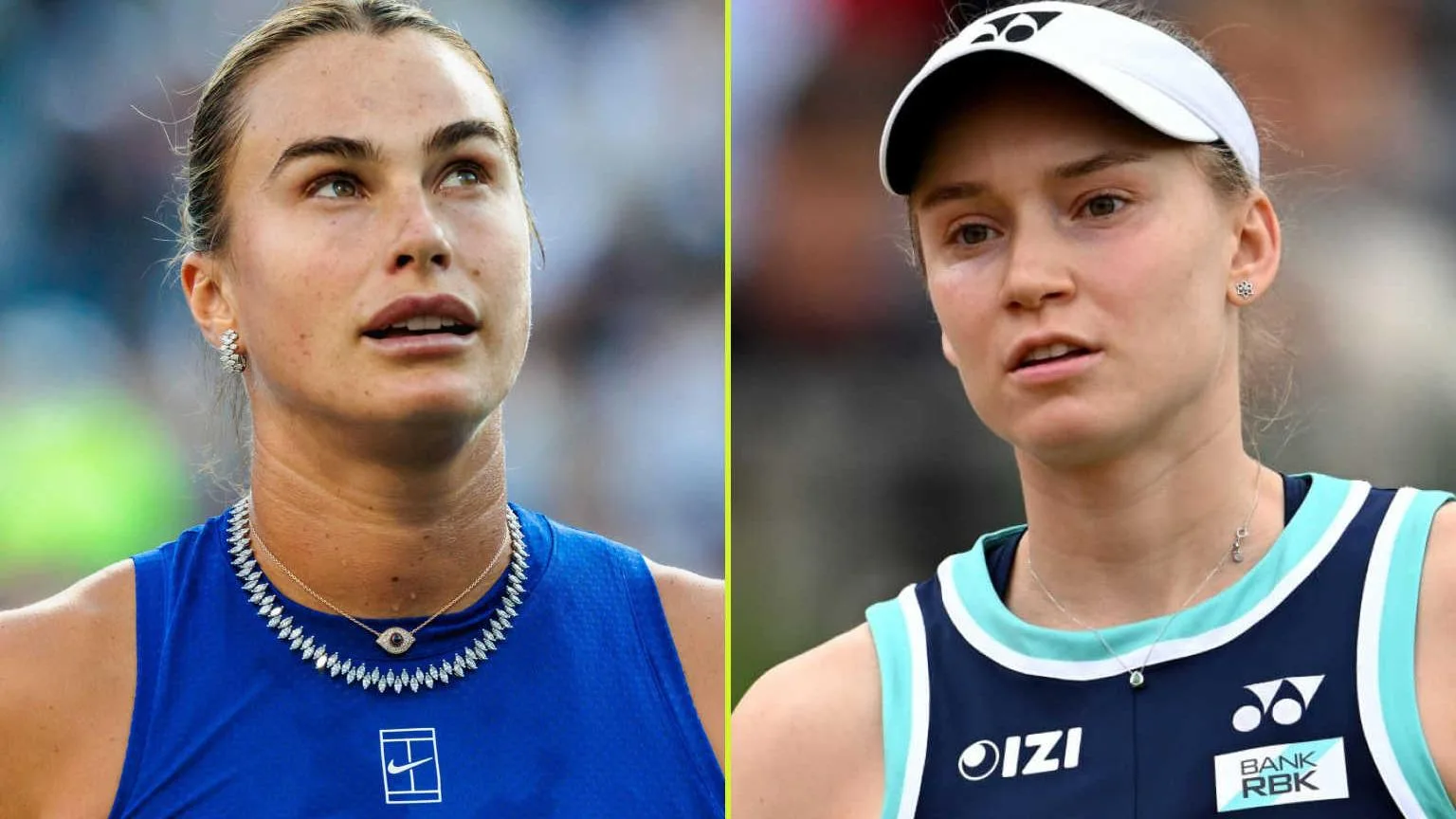
Elena Rybakina has reduced the distance to Aryna Sabalenka after the Canadian Open, and Cincinnati now offers her a direct path to the No 1 ranking.
Sabalenka has held the top spot in the WTA Rankings for 95 straight weeks since October 2024. In total, she has spent 103 weeks as world No 1. Rybakina, meanwhile, is seeking that position for the first time and has sat at world No 2 since March.
Rybakina’s run to the final in Toronto, where she lost to Iga Swiatek, lifted her tally to 8,316 points. That left her 354 points behind Sabalenka, who exited in a surprise fourth round defeat to Ekaterina Alexandrova.
The Cincinnati Open, however, introduces another important ranking swing. Rybakina is defending 390 points after reaching the semi-finals last year, while Sabalenka is defending 215 points from her quarter-final result in 2025. At the start of the event, the Live WTA Rankings showed Rybakina on 7,926 points and Sabalenka on 8,455, a gap of 529 points.
That margin has stayed unchanged in the current Live Rankings after both players won their opening matches in Cincinnati and collected 65 points each. Sabalenka is now on 8,520 points, with Rybakina on 7,991.
For Rybakina to overtake her rival, she must at least reach the final. If she gets there, she would move to 8,576 points, but that would only be enough if Sabalenka loses in the third round. Should Sabalenka advance beyond that stage, Rybakina would need to win the title.
A Cincinnati crown would give Rybakina 8,926 points, enough to take No 1 if Sabalenka falls before the final. Sabalenka, though, can guarantee she keeps the top ranking by reaching the final, which would lift her to 9,105 points, out of Rybakina’s reach at this tournament.
1000
Sabalenka opens Cincinnati with straight-sets win as ranking pressure remains
Sabalenka opened in Cincinnati with a win and now faces Wang Xinyu with No 1 pressure on her.
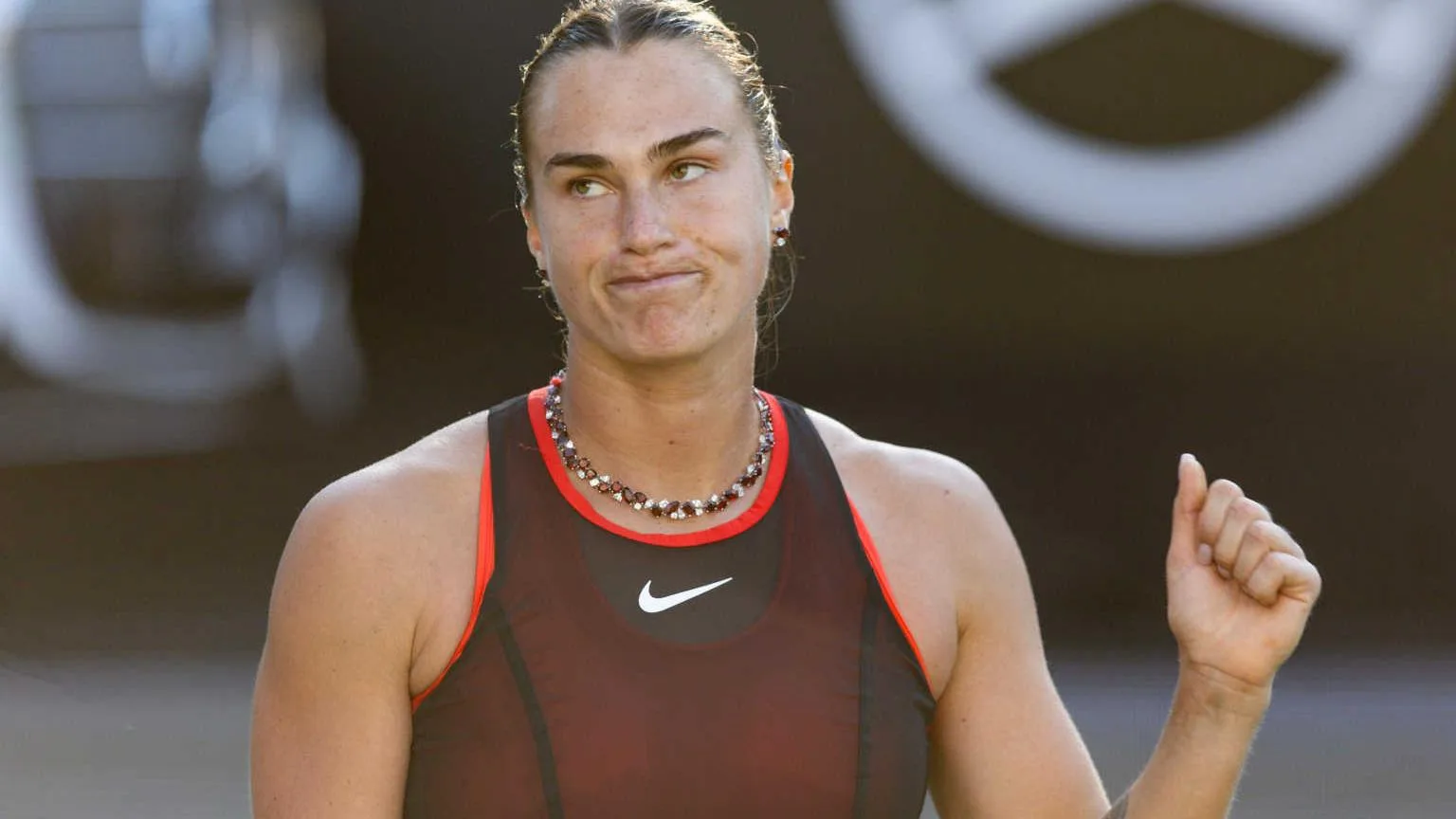
Aryna Sabalenka began her Cincinnati Open run with a composed victory over Talia Gibson, winning 6-2, 7-6 to move past the disappointment of her early exit in Canada. In that tournament, Ekaterina Alexandrova ended her stay in the fourth round, but Sabalenka responded with a cleaner result here.
The world No 1 is also playing under the added weight of the rankings race. With only 529 points separating her from Elena Rybakina on the WTA Tour, Sabalenka is trying to protect the top position she has held for the past two seasons. This has not been one of her strongest years on tour, especially through the clay and grass swings, and she has not lifted a title since the Miami Open in March.
Sabalenka has also spoken this season about how she has handled those difficulties. In an interview with The Tennis Channel, she discussed the way she works with Anton Dubrov, Jason Stacy and Max Mirnyi. “If I see my team start criticizing me too harshly, I think we’d end up in a big fight, and it wouldn’t be a good fight. Every player receives information differently,” she said about communication with coaches Anton Dubrov, Jason Stacy and Max Mirnyi.
She added: “Early in my career, I was heavily criticized and grew up in that environment, but today we like to talk about what’s happening, put it into perspective, and make adjustments.
“In tough times, we get closer, have fun, have barbecues, and try to relax a bit because there’s a lot of pressure. I feel like my recipe for overcoming these big challenges is through conversation and having fun.”
Next up for Sabalenka is Wang Xinyu in the third round, their second meeting on the WTA Tour and first since 2022. Sabalenka won their previous match at the 2022 Australian Open after dropping the opening set. She leads Wang by 40 places in the rankings, with Wang currently No 41.
The section around Sabalenka has already opened up, with Barbora Krejčíková and Donna Vekic out. The winner of Sabalenka and Wang will face either Sara Bejlek or Alexandrova. Looking further ahead, Elina Svitolina appears the likeliest quarter-final opponent, Coco Gauff the most likely semi-final hurdle, and Rybakina could yet meet Sabalenka in the final. That would make the race for world No 1 even more significant.

Jack Draper’s Instagram presence disappears amid injury uncertainty

Sinner’s Cincinnati absence fuels uncertainty over US Open appearance

Cincinnati heat tests players as Medvedev and Sinner emerge from different choices

Alcaraz Confronts On‑court Microphones During US Open Practice Ahead of Opelka Match

Raducanu Arrives at US Open With Momentum After Strong Hard‑Court Swing